
Pain Relief Deployment & Placement Guides
Designed for scalable, reusable, drug-free pain relief support across homes, clinics, workplaces, humanitarian settings, and underserved communities worldwide.
Why These Guides Matter
Pain relief only becomes truly scalable when people can reliably use solutions with minimal infrastructure requirements.
These deployment guides are designed to support repeatable, low-friction operational workflows that can function across real-world environments.
Pain Relief as Human Infrastructure
Traditional pain management systems often depend on centralized infrastructure, recurring supply chains, prescriptions, transportation access, and ongoing clinical interaction.
Distributed pain relief infrastructure enables support to move closer to the individual, the household, the workplace, and the community.
Operational simplicity is what allows systems to scale.
Starting Points
The guides below provide structured placement starting points organized by body area and pain type.
Because pain can involve multiple anatomical regions, users may review more than one guide depending on symptom location and movement patterns.
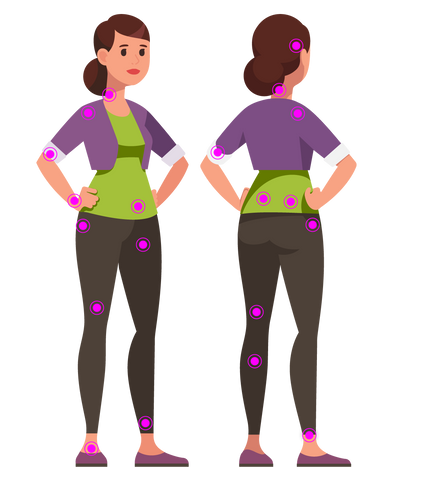
Operational Deployment Guides
Designed for Real-World Deployment
Training & Knowledge Transfer
Scalable systems require scalable knowledge transfer.
These operational workflows support:
- visual placement guidance
- community-based education
- partner training workflows
- simplified onboarding
- repeatable operational models
- distributed implementation systems
This enables organizations to deploy pain relief support more efficiently across large populations.
Frequently Asked Questions
What is the Operational Deployment Interface?
The Operational Deployment Interface is a structured system of placement workflows and deployment guides designed to support scalable pain relief implementation across diverse environments.
Why are placement guides important?
Standardized placement guidance improves usability, onboarding consistency, knowledge transfer, and operational scalability.
Can these workflows support humanitarian deployment?
The system is designed to support low-infrastructure operational environments including underserved communities, humanitarian settings, workplaces, households, and distributed care models.
Why is operational simplicity important?
Operational simplicity reduces deployment friction and allows systems to scale more effectively across large populations and geographically distributed environments.